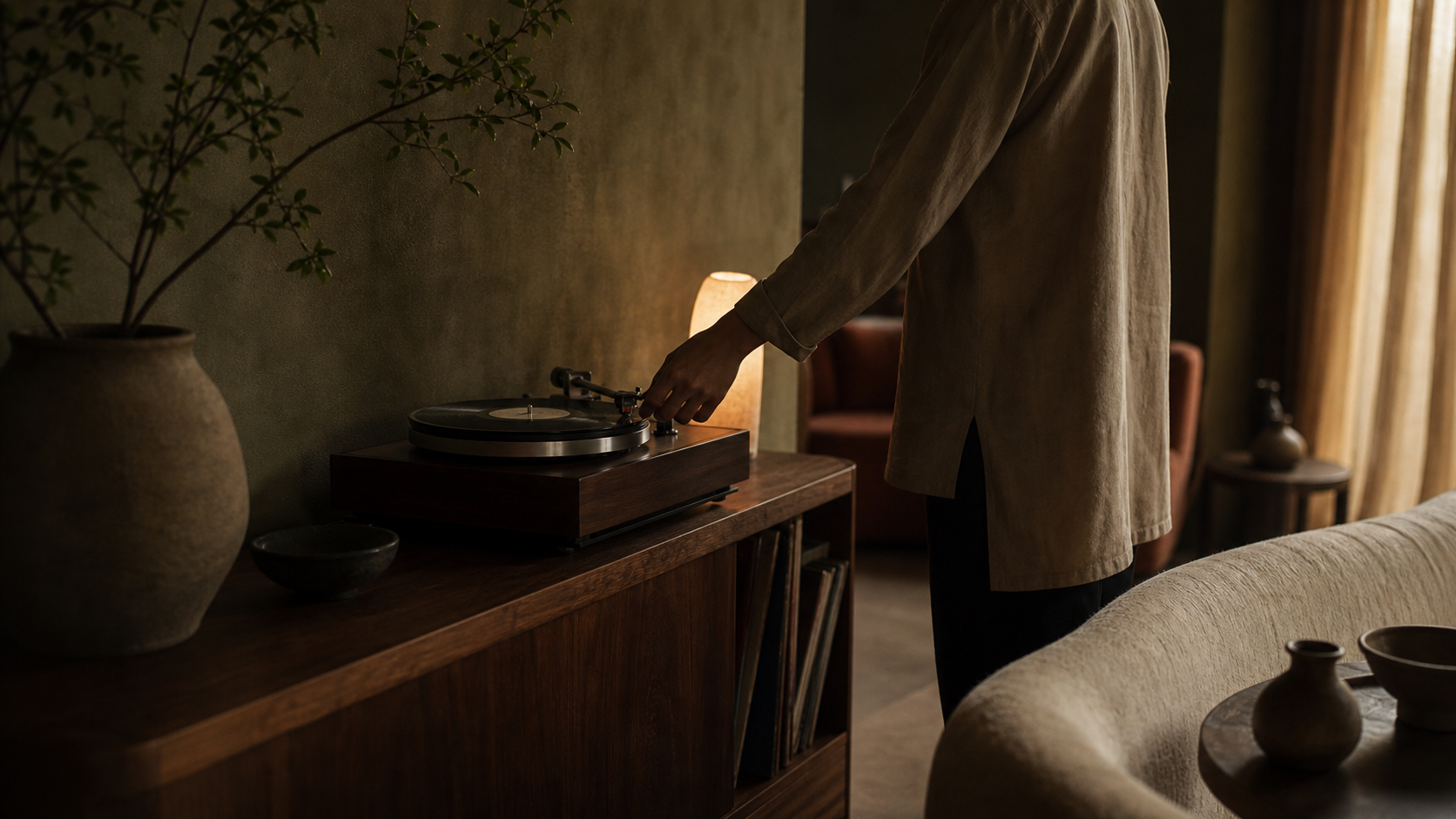
We usually describe a space through what we can see: its colour, proportions, objects, and light. Yet sound often decides how long we stay, how quickly we move, and whether a room feels intimate or exposed. It is an invisible material with a very physical effect.
Music curation begins with the same questions as interior styling. Who is this place for? What kind of energy should it hold? How should it change from morning to night? A playlist for breakfast cannot simply be a quieter version of a late-night set. Each moment has its own pace and emotional weight.
Sound changes the temperature of a room without moving a single object.
For hospitality spaces, music can create continuity between a digital promise and a physical experience. A guest might first encounter the mood through a shared playlist, recognise it on arrival, and carry it home afterwards. Sound becomes part of the memory of the stay.
The best music direction does not compete for attention. It notices the room, the people, and the hour. Like every considered detail, it is felt before it is analysed.