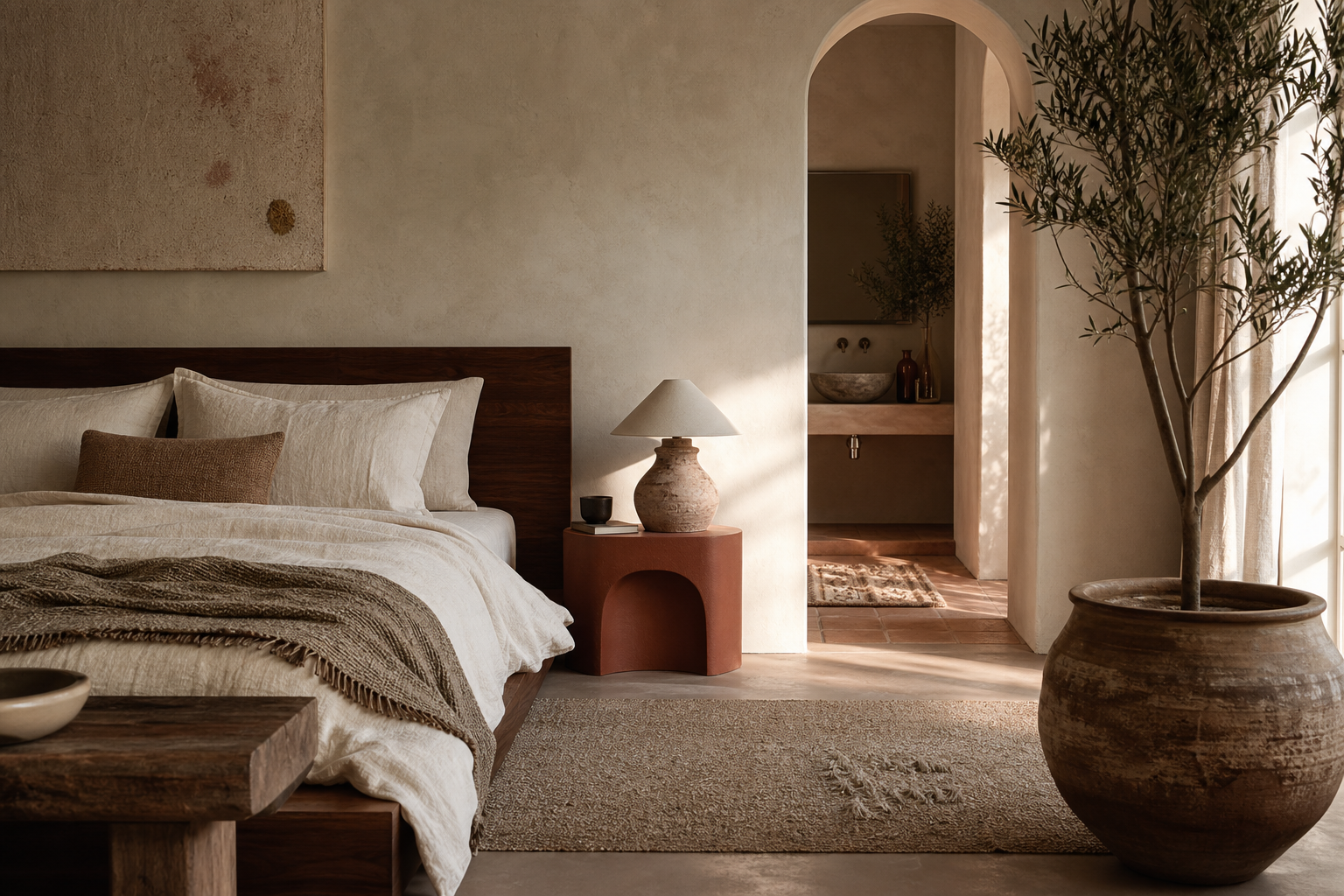
Hospitality spaces now meet many of their guests first through a screen. A single image can create desire, establish trust, and determine whether someone pauses or continues scrolling. Designing with the camera in mind is therefore practical, but designing only for the camera creates spaces that reveal their emptiness as soon as someone arrives.
A room can be visually striking and still feel uncomfortable. It can contain the right objects and lack any sense of generosity. The most successful spaces balance composition with use: a beautiful chair placed where someone genuinely wants to sit, light that photographs softly but also makes the evening feel warm, and objects that add character without becoming obstacles.
The photograph may invite someone in, but the feeling of the room is what makes them remember it.
We think about photographs as part of the guest journey rather than the final decoration of a project. Sightlines, contrast, texture, and small rituals are considered early. At the same time, every visual decision has to survive touch, movement, and daily life.
The goal is not an immaculate image. It is an honest image of a compelling experience. When a room feels good in person, the camera has something real to translate.